500%faster page load
Shirin Cafe
A 15-year-old website with no online ordering was quietly costing this restaurant orders — until a rebuild cut page load time by 500%.
Read case study →A Delaware accounting & tax practice
No live link included — the client's portal handles real client financial documents, so we're sharing an overview of what was built rather than a public link.
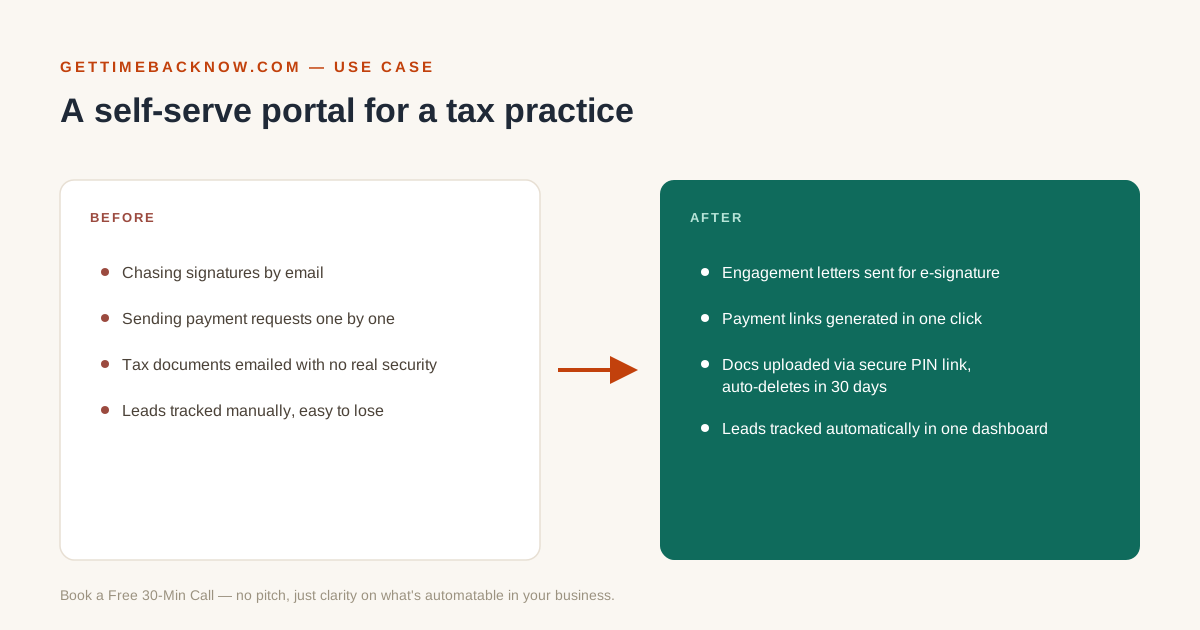
Payments, inquiries, signatures, and documents moved out of scattered apps and inboxes into one dashboard.
A small accounting and tax practice was running most of the business by hand, and a lot of it was scattered across different places.
Their website had gone completely down, and they weren't even sure which of several old GoDaddy accounts owned their domain. Anyone searching for them online found nothing. Potential clients reached out however they could: a phone call, a text, or an email. There was no single list of who had asked about what, so following up depended on memory.
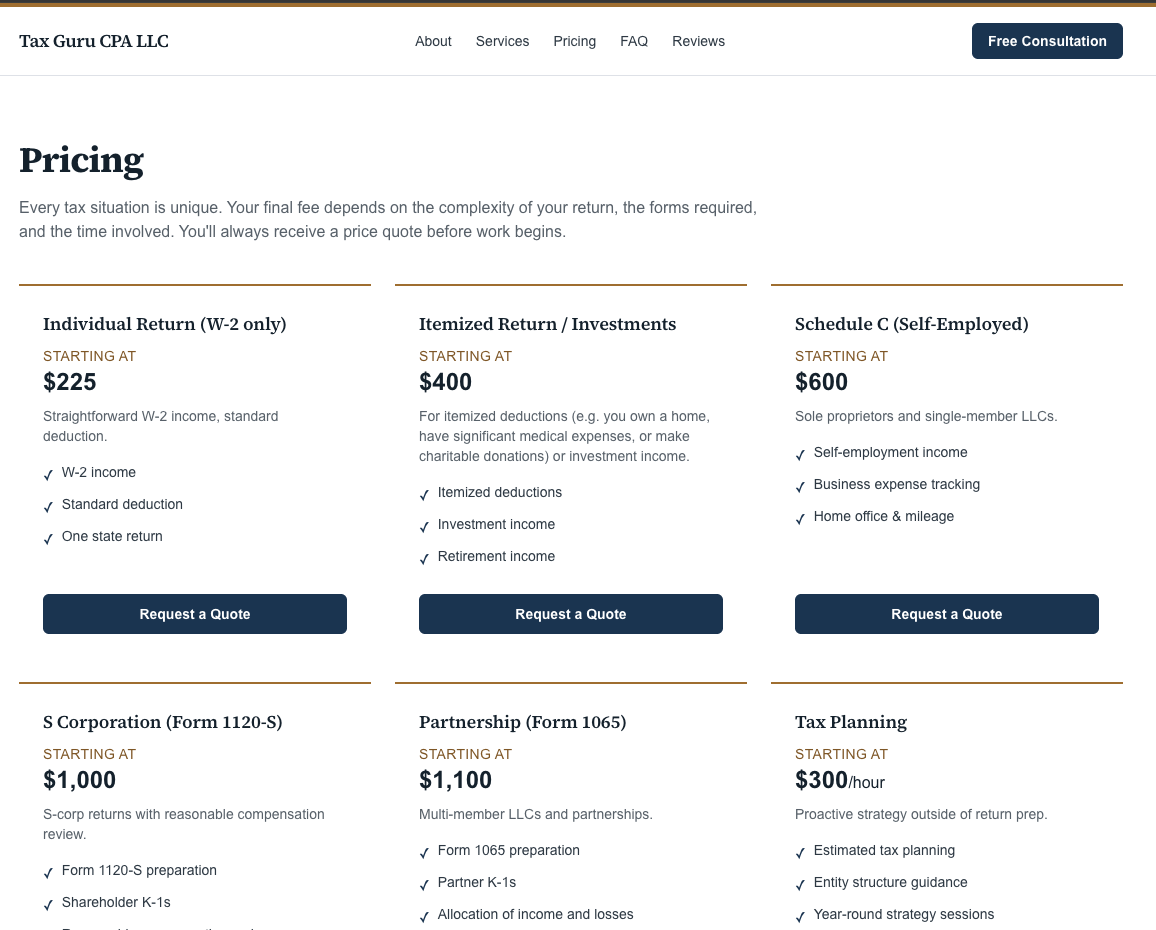
Getting paid was just as scattered. Clients paid by Zelle, Venmo, check, or cash in person, so figuring out who had paid meant checking several apps and a pile of paper. Engagement letters went out by email and then waited on signatures, and tax documents were requested over email, where sensitive files could sit in an inbox indefinitely. Prices weren't posted anywhere, so a potential client had no way to tell whether the services fit their budget without calling first. During tax season, the manual back-and-forth could easily eat 3–6 hours a week.
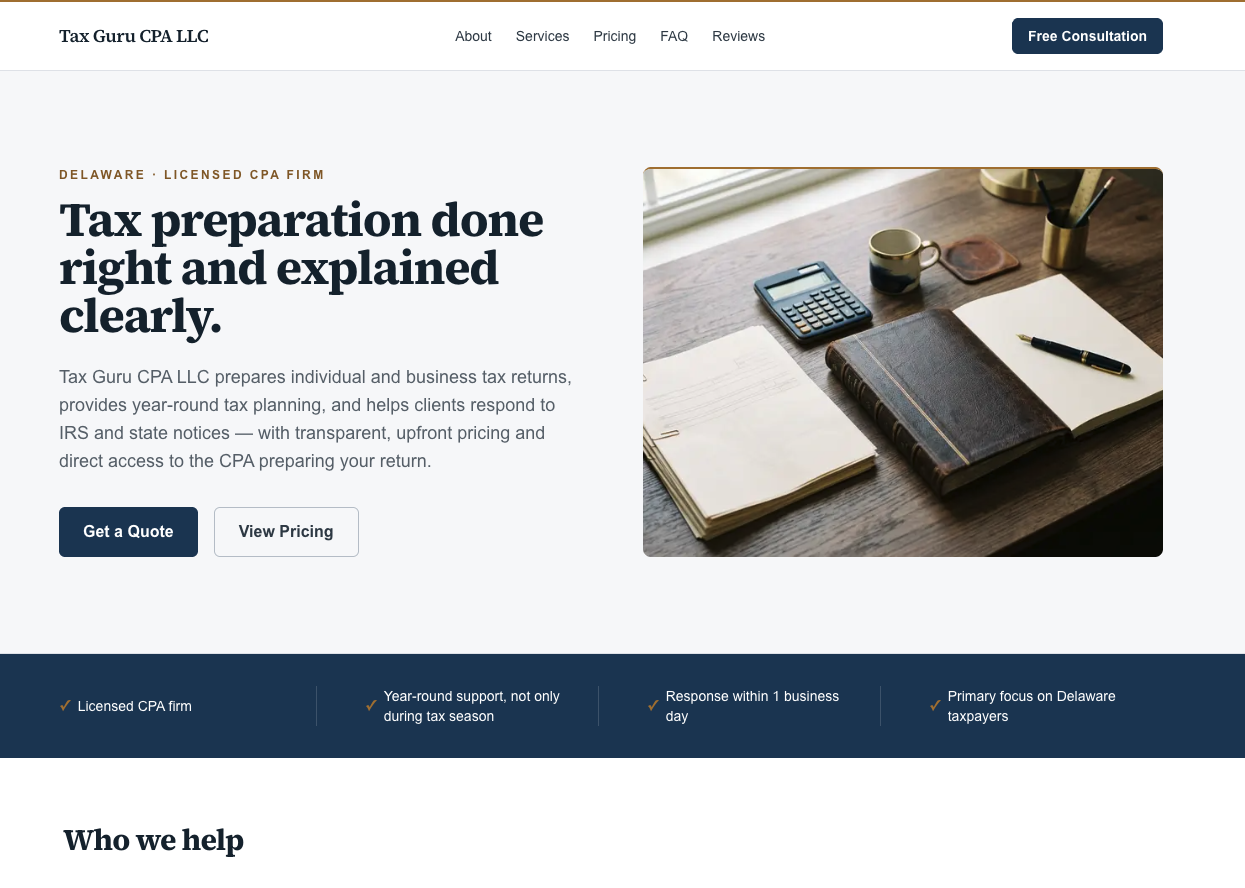
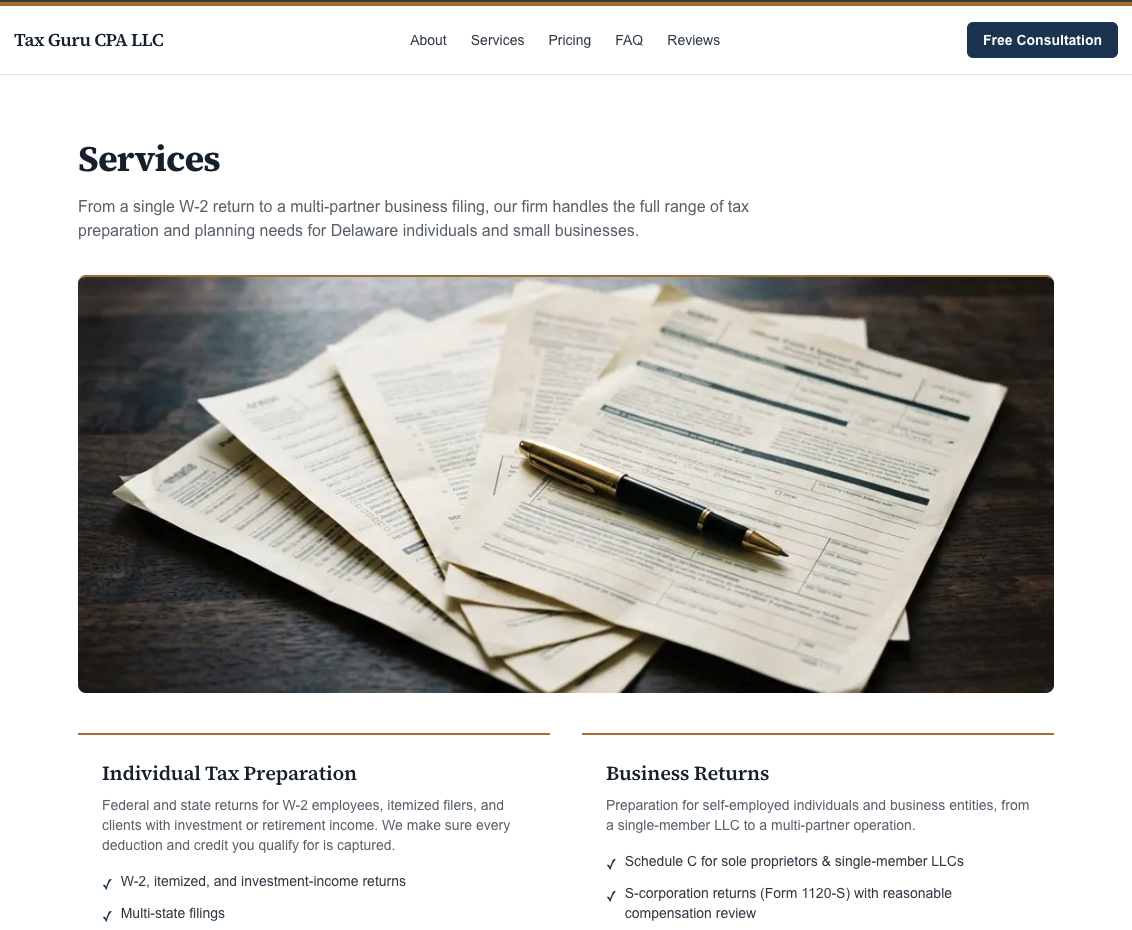
The firm has a working website again, one that search engines and AI tools can actually find. Instead of inquiries scattered across a phone, a text thread, and an inbox, every potential client from the website lands in one list, and the owner hears about each one right away. Anyone ready to talk can book a meeting straight from the site. Payments come in one way instead of four, and the owner can see who has paid at a glance. Signatures and document requests run through a self-serve flow instead of the inbox, and the auto-deleting upload link means sensitive tax documents don't sit around longer than they need to. Posting prices up front also means the people who reach out already know what the services cost.
We take data security seriously and build every system with privacy best practices in mind — especially for a business handling sensitive financial documents. Self-serve doesn't mean less careful; it means the careful parts (signing, storage, payment) happen automatically instead of by hand. For more on the automations we typically build for accounting and professional-services firms, see our industry automation playbooks.
Get your free time audit—we'll map exactly where your team is losing hours.
Get free time audit →A 15-year-old website with no online ordering was quietly costing this restaurant orders — until a rebuild cut page load time by 500%.
Read case study →Bel Air Systems, a NJ HVAC contractor, had zero online presence. We built their website and set up Google Business Profile, email, and a lead form.
Read case study →A New Jersey accounting firm collected tax info on a 12-page paper form. We replaced it with an encrypted online form that emails the CPA directly.
Read case study →