Stop Automating the Wrong Things
Most automation projects fail not because the tools are bad, but because teams automate broken processes. Here's the framework that actually sticks.
March 15, 20256 min read
Read article →A good missed-call text is short. It says who you are, admits you missed the call, asks one easy question, offers a way to book, and tells the caller when to expect a reply. That's all it needs to do, and it often turns a lost call into a conversation before the caller moves on to the next business on the list.
Below are ten templates you can adapt, followed by what to avoid and how to set it up. If you want the full picture of catching calls you can't answer, start with our guide, How to Stop Missing Customer Calls.
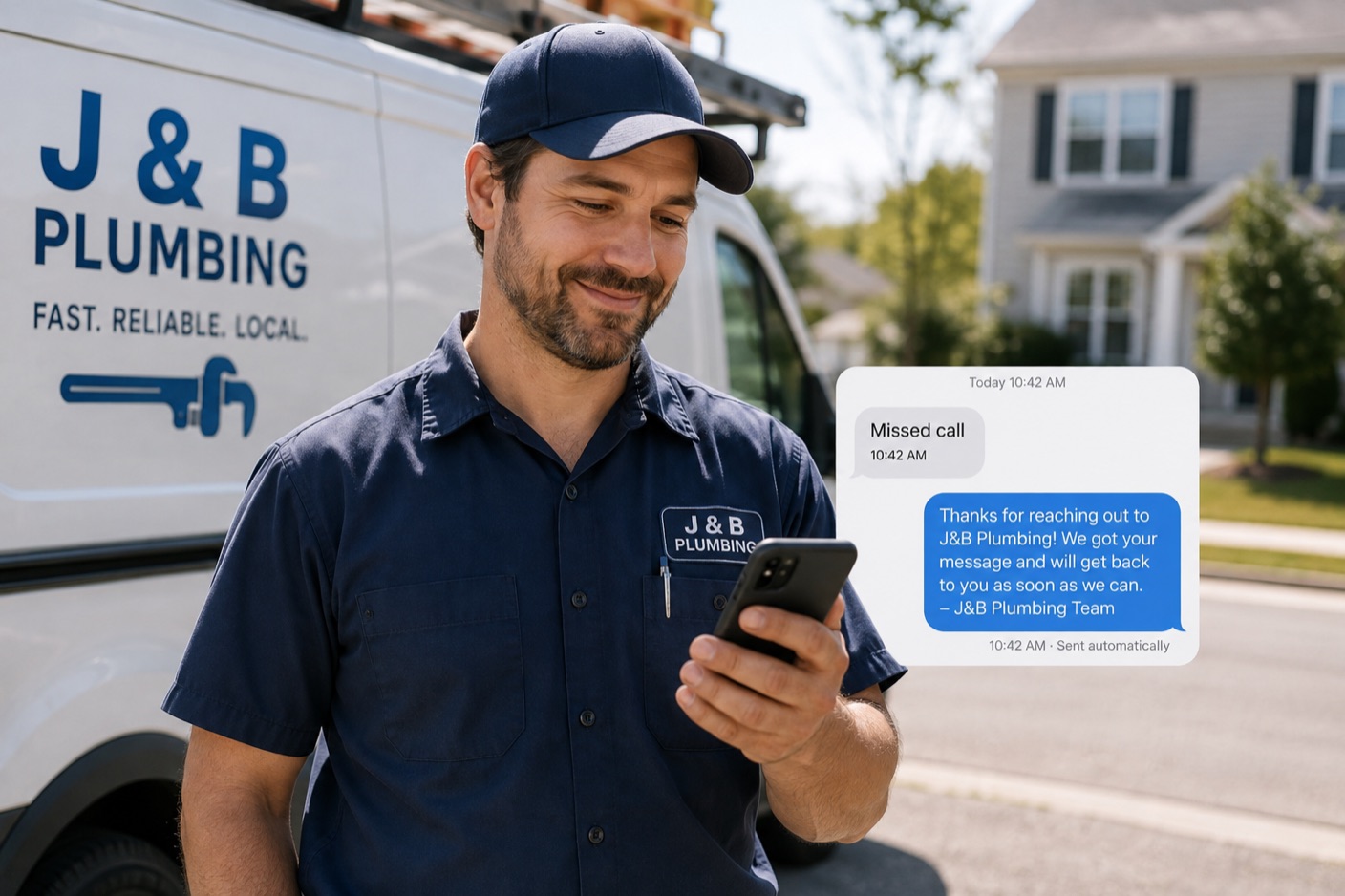
Hi, this is [Business]. Sorry we missed your call! What can we help you with? Reply here, or book a time: [link].
Hi, [Business] here. We're with a customer right now and couldn't pick up. What do you need? We'll reply as soon as we're free, usually within [timeframe].
Thanks for calling [Business]. We're closed right now and will reply when we open at [time]. Tell us what you need by text, or book online anytime: [link].
Hi, this is [Business]. Sorry we missed you. Reply with your name, address, and what's going on, and we'll get back to you within [timeframe]. If anyone is in danger, call 911. For an urgent job, call [emergency number].
Hi, this is [Practice]. Sorry we missed your call. To schedule or change an appointment, book here: [link], or reply with a good time to call. Please don't text health details.
Hi, this is [Firm]. Sorry we missed your call. We'd like to help. What's the best time for a short call? You can also pick a slot here: [link]. Please keep case details for the call.
Hi, [Shop] here. Sorry we missed you! We're open [hours]. What item needs help? Send a quick description or a photo and we'll reply with next steps.
Send this once, a few hours later or the next morning. Don't send a third.
Hi, [Business] again. We still want to help with your call from [day]. Reply here or book a time: [link]. If you've already sorted it, no worries.
Hi [First name], it's [Business]. Sorry we missed your call. Is this about your [recent job or appointment], or something new? We'll get right back to you.
Once the caller answers, a person should take over. This message works for either you or an automatic qualifier.
Thanks, [First name]. To get you the right help, what's your address (or ZIP code), and when would you like us to come out? We'll confirm a time shortly.
Texting is regulated, and the rules vary by country, state, and the service you use. A few practical habits help:
We're not lawyers, so confirm the specifics for where you operate.
You have a few ways to send these, from simplest to most flexible:
Then test it. Have a friend call and hang up, and read exactly what arrives. Try it at an odd hour too.
For two weeks, track three numbers: missed calls, how many people replied to your text, and how many of those became booked jobs or appointments. If few reply, shorten the message or change the question. If many reply but few book, the issue is your follow-up speed, not the text.
A reply is the start of a lead, so make sure someone follows up quickly. Our guide on following up with new leads covers what to do next, and appointment booking and reminders shows how to let people book themselves.
If you miss many calls, or your callers expect a voice on the line, a text may not be enough. That's when an answering service or an AI receptionist comes in. We explain the first steps in AI Receptionist for Small Business, and home service owners can see more in AI Automation for Home Services Businesses.
Pick one template, fill in the brackets, and turn it on this week. For ready-made wording in other situations, the prompt library has customer service prompts you can customize. If you'd like help setting it up, try our free audit or book a free discovery call. No pitch, just clarity.
Keep it short: say who you are, apologize briefly, ask one easy question like what they need, and offer a way to reply or book. Add when they can expect an answer, but only if you can meet it. One text and one follow-up is enough.
Yes. Many business phone systems, field-service tools, and CRMs have a missed-call text feature, and automation tools like Zapier, Make, or n8n can build one. Include an opt-out, check any carrier registration rules with your provider, and test it before relying on it.
Keep it simple and friendly: "Hi, this is [Business]. Sorry we missed your call! What can we help you with?" Follow it with a way to reply or book online. Skip long explanations, because shorter messages get read and answered more often.
Rules differ by country, state, and provider. Good habits are texting only people who contacted you, including an opt-out like "Reply STOP", honoring it, and asking your provider about carrier registration. We are not lawyers, so confirm the details for where you operate.
Get your free time audit—we'll map exactly where your team is losing hours.
Get free time audit →Most automation projects fail not because the tools are bad, but because teams automate broken processes. Here's the framework that actually sticks.
A 10-person agency was losing 47 hours a week to manual work they didn't even know was automatable. Here's what we found—and fixed.
There are 5 predictable reasons automation projects fail. Most teams hit all 5. Here's how to avoid every one of them.